
SSEG commissioning · 2026 guide
SSEG registration in Cape Town: A step-by-step guide for 2026.
Cape Town has more rooftop solar than ever, and a large share of it has never been authorised. Some owners didn't know they had to apply. Others started the paperwork, switched the system on, and never finished. Both carry real risk, for safety, for the electricity supply and for the day the property is sold.
This guide walks through the City of Cape Town's small-scale embedded generation (SSEG) process as it works in 2026: who has to apply, each step in order, the documents involved, and where applications usually get stuck.
What SSEG is, and who has to apply
Small-scale embedded generation is any generator under 1 MVA connected to your side of the electricity meter. Rooftop solar PV is the most common example, but hybrid inverters with batteries and generators that can run alongside the grid count too.
- Inside the City's supply area: Systems under 1 MVA go through the City's SSEG authorisation process. Larger embedded generation, from 1 MVA up to 100 MVA, has its own process.
- In an Eskom supply area: You apply to Eskom for consent to connect, not to the City.
- Batteries and backup systems: From 1 October 2023 the City treats all new solar PV and battery storage applications as grid-tied, and it no longer accepts new applications for standby or off-grid systems. In practice, a hybrid or battery backup system goes through the same SSEG process.
- Solar PV geysers: These are authorised through the online SSEG process too, but they don't need an ECSA-registered professional's sign-off.
Why registration matters
The rules exist for a practical reason. A grid-tied inverter must disconnect when the grid goes down. If it doesn't, it can feed power back into a line that a municipal electrician believes is dead. Authorisation is how the City confirms that each system is type-tested, installed safely and set up as the application says.
The consequences of skipping it are set out in the City's Electricity Supply By-law. Failing to register an SSEG installation is a criminal offence punishable by a fine or imprisonment. Owners of unregistered systems receive a contravention notice and must:
- Disconnect the system within five working days
- Provide a Certificate of Compliance
- Register the system within one month
- Complete authorisation within three months
The City charges a service fee for unauthorised systems and warns that non-compliance can lead to the electricity supply being disconnected.
It also matters when you sell. Conveyancing attorneys treat an unauthorised system as a latent defect that a seller who knows about it must disclose, and transfer of a property already depends on a valid electrical Certificate of Compliance, which includes the SSEG installation.
The process, step by step
The City moved SSEG applications online. Here is the sequence, in order:
- Register on e-Services. Create a profile on the City's e-Services portal, or log in to an existing one.
- Activate Energy Services. Turn on the Energy Services module in your profile.
- Open Energy Services Applications. This is where SSEG applications are submitted and tracked.
- Service providers register. The electrical contractor and the ECSA-registered professional who will sign the commissioning report each complete the City's Service Provider Registration.
- Grant proxy authorisation (optional). The property owner can authorise the installer to handle the application on their behalf.
- Submit the SSEG application. Include the technical details of the system. Only inverters on the City's approved list can be selected.
- Receive the Permission to Install letter. The City emails it once the application is approved.
- Install the system, but leave it off. The installation may go ahead now. The system may not be switched on yet.
- Upload the Certificate of Compliance and the signed Supplemental Contract. These follow installation and sign-off by the electrician.
- Commissioning sign-off. The ECSA-registered professional tests the system, logs in and signs off the commissioning report.
- Receive the Commissioning Letter. Only after the City emails this letter may the system be switched on.
What you need to have ready
- Your e-Services profile, with Energy Services activated
- The inverter make and model, confirmed on the City's approved inverter list
- The system's technical details: PV array size, inverter rating, battery capacity and whether it exports
- A single-line diagram of the system as it will be installed
- A registered electrical contractor to issue the Certificate of Compliance
- An ECSA-registered professional to commission the system and sign the report
- The signed Supplemental Contract
Feeding power back to the grid, or not
When you apply, you choose whether the system will export surplus power to the City's grid.
- With feed-in: The City installs an AMI meter at the owner's cost, based on a metering quotation. Exported electricity is credited to your municipal account under the SSEG feed-in tariff.
- Without feed-in: The system needs reverse power flow blocking, and the City installs a prepayment meter at its own cost.
Customers whose credits regularly cover their whole municipal account can apply for the City's Cash for Power programme, which pays out the surplus: Once a year above R1,000 for residential customers, and monthly above R5,000 for commercial customers. The feed-in rates themselves are set each year in the City's electricity tariff book, so check the current figure before you build a business case around exporting.
What the commissioning engineer checks
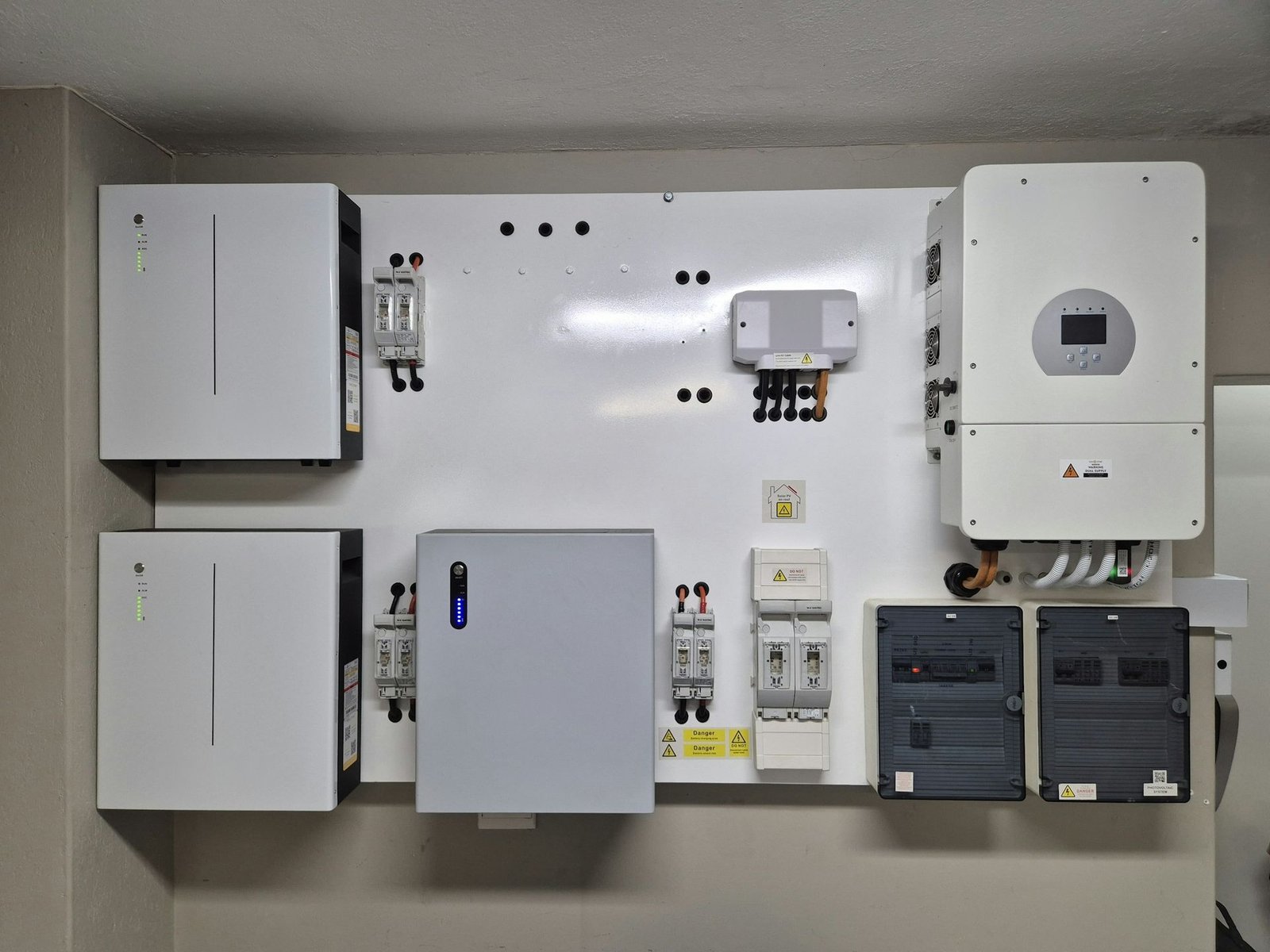
Commissioning is more than a signature. Before signing the report, the registered professional confirms that the installed system matches the application and behaves safely on the network. A thorough commissioning visit covers:
- Inverter make, model and settings against the approved list and the application
- Loss-of-mains (anti-islanding) disconnection when the grid supply is removed
- Export limiting or reverse power blocking, where the application says the system doesn't export
- Protection, isolation and earthing, including DC isolation on the PV side
- Backup and changeover arrangements on hybrid systems
- Labelling and emergency shutdown signage
Where applications usually get stuck
- The inverter isn't on the approved list. Check before you buy, not after it is on the wall.
- The installed system differs from the application. A larger array, a different inverter or added batteries all need the application updated.
- Service providers aren't registered. The electrician and the signing professional must both be registered on the City's system.
- Documents are missing. No Certificate of Compliance or no signed Supplemental Contract means no commissioning.
- The system was switched on early. Running before the Commissioning Letter is a contravention in its own right.
Already have a system that was never registered?
Start now rather than waiting for a contravention notice. Get a Certificate of Compliance for the installation, check the inverter against the approved list, and submit the SSEG application through e-Services. An independent commissioning engineer can test the existing installation and give you a plain list of anything that must be fixed before it can be signed off.
Before you buy: Cut the waste first
If your system isn't installed yet, it is worth measuring what your building actually needs before you size it. A system sized on a wasteful load costs more and pays back later. Our guide to doing an energy audit before solar explains why.
Get your system commissioned and signed off
Bynergex commissions grid-tied solar PV and battery systems for homes, businesses and industrial sites. Bramwill Bruinders is an ECSA-registered Pr. Tech. Eng., and his sign-off is accepted by the City of Cape Town.
Free download
Get the SSEG Registration Pack
A four-page pack for getting a solar PV or battery system authorised in Cape Town: The document checklist, the City's 11 steps as a tracker, and a pre-commissioning self-check to run with your installer. Plus the full article as a PDF to keep with your property records.
Frequently asked questions
Do I need to register a battery backup system in Cape Town?
Yes. Since 1 October 2023 the City of Cape Town treats all new solar PV and battery storage applications as grid-tied, and it no longer accepts new applications for standby or off-grid systems. Hybrid and battery backup systems go through the SSEG authorisation process.
Can I switch my solar system on before the Commissioning Letter arrives?
No. The Permission to Install letter lets you install the system, but it may only be switched on once the City emails the Commissioning Letter after the commissioning report is signed off.
Who can sign the SSEG commissioning report in Cape Town?
An ECSA-registered professional who is registered on the City's Service Provider Registration. Bramwill Bruinders of Bynergex is a registered Pr. Tech. Eng., and his sign-off is accepted by the City of Cape Town.
What happens if my solar system is not registered?
Under the City's Electricity Supply By-law it is an offence. Owners receive a contravention notice to disconnect within five working days, provide a Certificate of Compliance, register within one month and complete authorisation within three months, and the City charges a service fee.
Do I apply to the City or to Eskom?
It depends on who supplies your electricity. Properties in the City of Cape Town's supply area apply to the City. Properties in an Eskom supply area apply to Eskom for consent to connect.
Sources
- City of Cape Town: Apply for authorisation to install an embedded generation system
- City of Cape Town: Apply to sell surplus SSEG electricity to the City
- City of Cape Town: Requirements for Small-Scale Embedded Generation
- STBB: The regulatory framework governing solar power systems in the City of Cape Town (22 November 2024)
- Green Building Africa: All solar PV and battery systems treated as grid-tied from October 2023 (29 September 2023)
How useful was this article?
Ask the engineer
Have a question about this topic, or about your own site? Ask it here. Bramwill reads every question and answers the useful ones on this page. We publish your name and question, never your email address.