
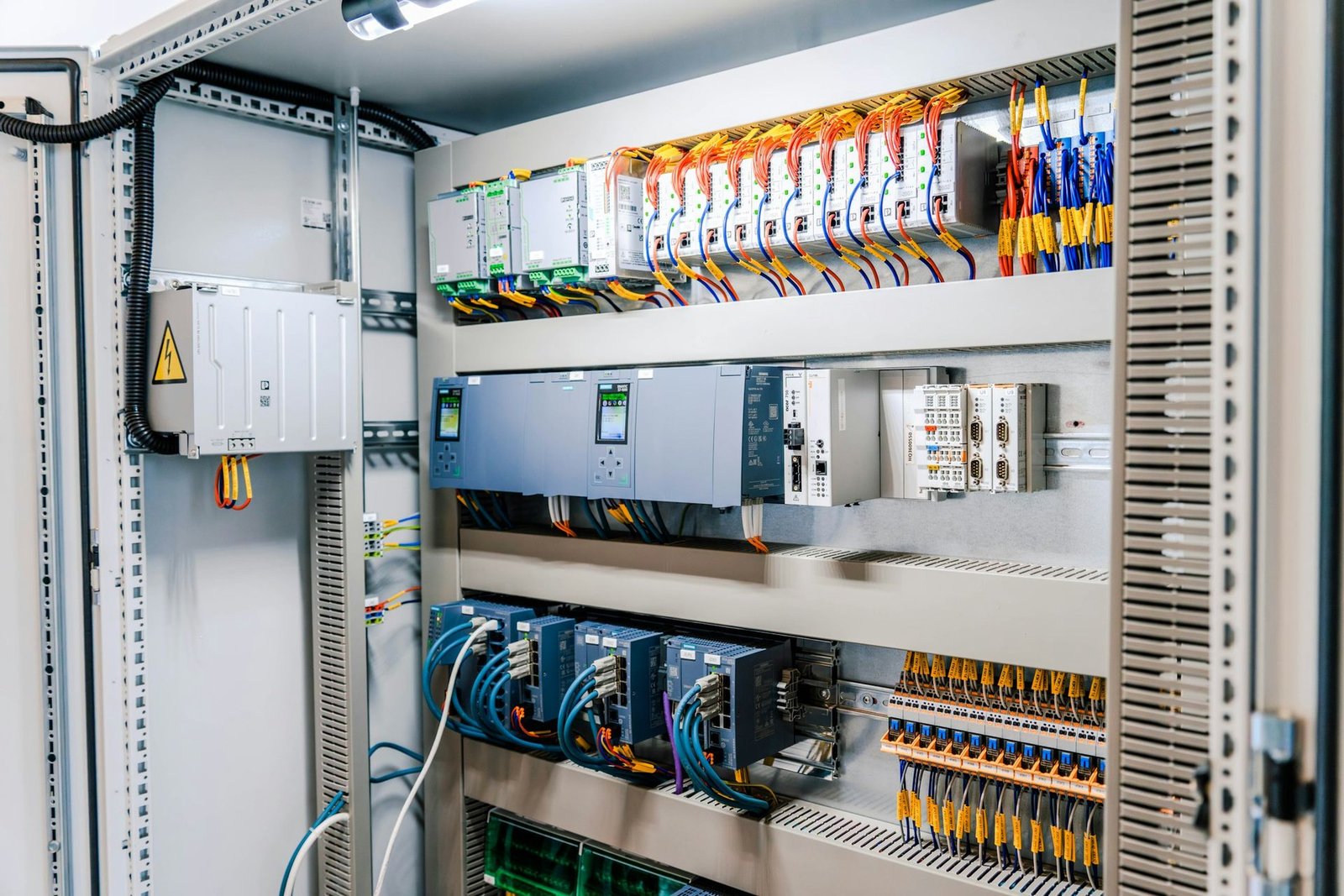
Energy efficiency · 2026 guide
Power factor correction in South Africa: How to stop paying for power that does no work.
Most electricity bills for commercial and industrial sites carry a cost that has nothing to do with how much work the site does. It comes from current that flows back and forth to magnetise motors and transformers, loads up your cables and transformer, and shows up on the account as reactive energy or inflated kVA demand.
That cost is power factor. It is one of the most common findings in an energy audit, and one of the fastest to pay back. On one site I was responsible for, correcting the power factor from 0.91 to 0.99 eliminated the reactive energy penalties entirely. This guide explains what power factor is, what it costs under 2026/27 tariffs, and how to correct it without creating new problems.
What power factor actually is
Your site draws two kinds of power. Real power (kW) does useful work: It turns motors, runs compressors and lights the building. Reactive power (kVAr) does no work, but motors, transformers and fluorescent ballasts need it to build their magnetic fields. Together they make up apparent power (kVA), which is what your supply, cables and transformer actually have to carry.
Power factor is simply the ratio of real to apparent power, kW ÷ kVA. At 1.0, every amp does useful work. At 0.85, a site doing 500 kW of work draws about 588 kVA, so nearly 18% more current flows through every cable, switch and transformer than the work requires.
What drags it down
- Induction motors, especially oversized or lightly loaded ones running pumps, fans and compressors
- Transformers that are lightly loaded for much of the day
- Older lighting with magnetic ballasts
- Welding sets and induction furnaces on industrial sites
- Failed capacitor steps in an existing correction bank that nobody has checked for years
What it costs you in 2026/27
Eskom's reactive energy charge
On Eskom's Megaflex, Miniflex and Ruraflex tariffs, reactive energy is charged when it exceeds 30% of the kWh recorded in peak and standard periods, which is equivalent to a power factor of 0.96 or less. On Megaflex, the excess is worked out per 30-minute period and added up for the month. The charge only applies in the high-demand season, from 1 June to 31 August, and the 2026/27 Megaflex rate is 34.49c per kVArh, excluding VAT.
kVA demand and network charges
Many commercial and industrial tariffs bill capacity in kVA rather than kW, and that charge applies every month, not only in winter. The City of Cape Town's large-user tariffs, for example, include a demand charge and a network capacity charge per kVA. Its 2026/27 network capacity charge for low-voltage large users is R39.00 per kVA, excluding VAT, before the demand charge itself. Every kVA you don't need to draw is money saved month after month.
The costs that never appear as a line item
- Losses: Cable and transformer losses rise with the square of the current, so excess current turns paid-for energy into heat.
- Capacity: A site at 0.85 may think it needs a bigger transformer or supply upgrade when correction would free up the headroom it already has.
- Voltage: Higher current means more voltage drop at the far end of long feeders, which stresses motors and electronics.
A worked example
Consider a site with a 500 kW peak load at a power factor of 0.85, corrected to 0.98.
| Demand before correction | 500 kW ÷ 0.85 ≈ 588 kVA |
|---|---|
| Demand after correction | 500 kW ÷ 0.98 ≈ 510 kVA |
| kVA you stop paying for | ≈ 78 kVA every month |
| At an assumed R250 per kVA per month | ≈ R19,500 a month, about R234,000 a year |
| Eskom Megaflex winter example | 200,000 kWh in peak and standard periods at 0.85 draws about 124,000 kVArh. The free allowance is 60,000, so about 64,000 kVArh × R0.3449 ≈ R22,000 a month in June, July and August |
Your tariff, load and hours will differ, and the figures above assume the power factor is low at the moment your demand peaks. That's exactly what a measurement confirms. The point is the size of the number: Correction equipment often pays for itself well within the first couple of years.
The solar trap: Why power factor can get worse after installing PV
Most grid-tied inverters supply real power at or near unity power factor. When the PV system covers part of your kW, the grid still supplies all of the kVAr your motors need. The ratio at your meter shifts, so the measured power factor falls, sometimes enough to trigger reactive energy charges you never paid before.
This is fixable. Some inverters can supply reactive power within the limits the utility allows, and a correction bank can be resized for the new load profile. The point is to check power factor as part of any solar design, and again after commissioning, rather than discovering it on the first winter bill.
How to correct it, safely
- Measure first. Log power factor, kVAr demand and harmonic distortion at the main incomer for at least a week, so the design reflects real loads, nights and weekends.
- Choose the right type of correction. Fixed capacitors at large motors suit steady loads. An automatic capacitor bank at the main board switches steps in and out as the load changes. Sites with fast-changing loads may need an active filter or static compensator.
- Check for harmonics before adding capacitors. Variable speed drives, UPS systems and LED lighting create harmonic currents. A plain capacitor bank can resonate with the transformer and amplify them. On these sites, use a detuned bank, where each capacitor step has a reactor that moves the resonance safely away from the harmonics present. Manufacturers commonly offer 7% and 14% detuning; the right choice depends on the measured harmonic spectrum.
- Don't overcorrect. Aim for about 0.97 to 0.99. A leading power factor at light load can raise voltages and cause its own problems, so the controller needs sensible settings and enough steps.
- Maintain it. Capacitors lose capacitance with age and heat, and contactors wear. Check the bank's steps, temperatures and controller alarms at least once a year, and after any major change to the site's loads.
Questions to ask a power factor correction supplier
- Was the bank sized on logged measurements at our incomer, or on our bills?
- What harmonic distortion did you measure, and is the bank detuned to suit it?
- What power factor will we reach at peak demand and at light load?
- How many steps does the bank have, and how does the controller prevent overcorrection?
- Have you allowed for our solar system, existing or planned?
- What will the bank save per month, and how will we verify it on the bill?
- What maintenance does it need, and who will do it?
Find out what your power factor is costing you
Power factor is checked in every Bynergex Energy Loss Audit: We log your incomer, read your tariff, and tell you what correction is worth before you spend anything. We don't sell the equipment, so the advice is independent.
Free download
Get the Power Factor Self-Check
A four-page worksheet: Work out your power factor from your bill, estimate what it costs in kVA demand and Eskom winter reactive charges, check your site and any existing capacitor bank, and the questions to ask a correction supplier. Plus the full article as a PDF to share with your team.
Frequently asked questions
What is a good power factor for a commercial or industrial site?
Aim for 0.97 to 0.99. Eskom charges reactive energy once it exceeds 30% of the kWh recorded in peak and standard periods, which is a power factor of 0.96 or less, and any tariff billed in kVA rewards every improvement. Avoid correcting to a leading power factor at light load.
When does Eskom charge for reactive energy?
On Megaflex, Miniflex and Ruraflex, during the high-demand season from 1 June to 31 August, for reactive energy above 30% of the kWh recorded in peak and standard periods. The 2026/27 Megaflex rate is 34.49c per kVArh, excluding VAT.
Can installing solar make my power factor worse?
Yes. Grid-tied inverters usually supply real power at near-unity power factor, so the grid still supplies all the reactive power your motors need. The power factor measured at your meter can fall, and reactive charges can appear. Check it in the solar design and after commissioning.
Does power factor correction save kWh?
Only a little, through lower cable and transformer losses. Most of the saving comes from lower kVA demand charges and avoided reactive energy charges, which is why the business case depends on your tariff.
Why do harmonics matter when adding capacitors?
Variable speed drives, UPS systems and LED lighting create harmonic currents. A plain capacitor bank can resonate with the supply transformer and amplify them, damaging capacitors and other equipment. Measure harmonics first and use a detuned bank or active filter where needed.
Sources
- Eskom: Tariffs and Charges Booklet 2026/27 (reactive energy charge definition, high-demand season and Megaflex rate)
- Terawatt Energy: Reactive energy charge, the winter-only line on your bill (3 August 2026)
- City of Cape Town: 2026/27 consumptive tariffs, Annexure 4 (large-user network capacity charge)
- Powerside: Safeguard against resonance with low-voltage detuned capacitor banks
How useful was this article?
Ask the engineer
Have a question about this topic, or about your own site? Ask it here. Bramwill reads every question and answers the useful ones on this page. We publish your name and question, never your email address.